Escape-Proof Dog Harnesses (2026): Why Dogs Back Out, and the Designs That Hold
A dog that backs out of a harness has found the pivot point every two-strap design shares. The three design families that close it, what to do about the dog who hates the bulky option, and the two-dollar backup technique that makes any harness safer.
Some links below are affiliate links. If you buy through them, WoofTested may earn a small commission at no extra cost to you, including as an Amazon Associate, where we earn from qualifying purchases. We only recommend products that pass our Fit Analysis — and we publish the ones that don't.
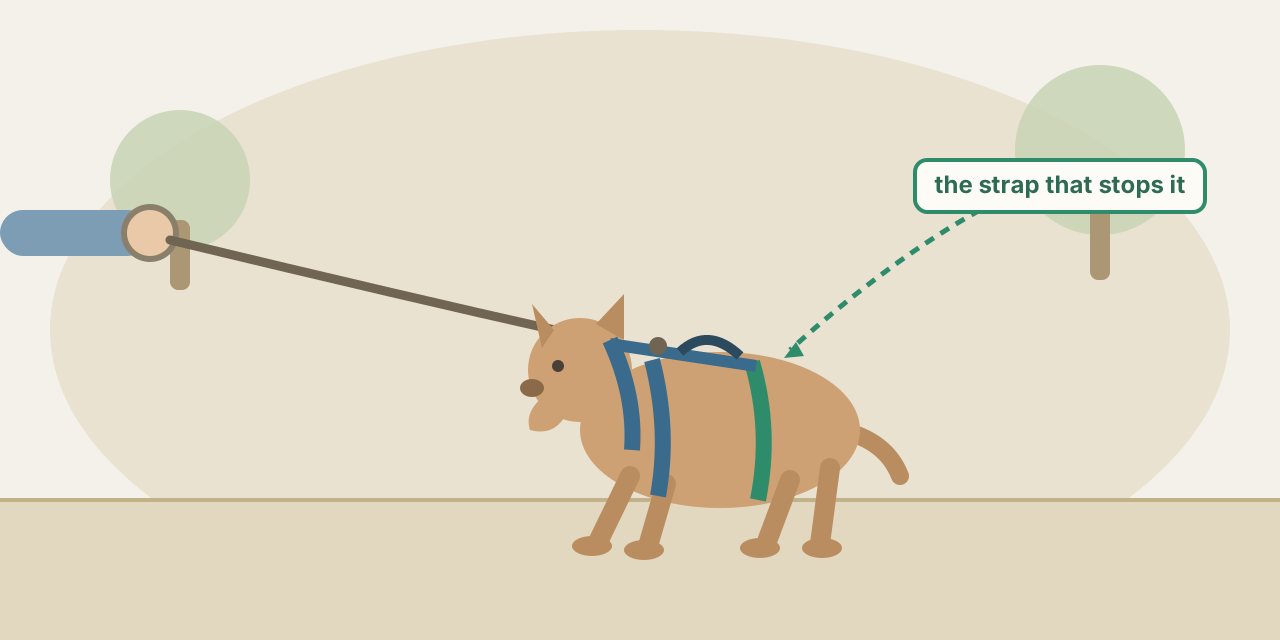
Dogs do not escape harnesses by strength — they escape by geometry. A standard two-strap harness has one girth strap behind the front legs, and a dog that plants its feet, drops its head, and reverses rotates the whole harness forward around that single anchor point until it slides off over the shoulders. Every genuine escape-proof design closes that pivot in one of two ways: a third strap behind the ribcage that anchors on the narrow part of the body, or a cinching element that tightens when the dog pulls backward.
For most escape artists, the Ruffwear Flagline is the buy — a three-strap, six-adjustment-point harness that contains back-out attempts without the bulk that makes some dogs hate wearing the heavier options. If your dog is big, strong, or you need to physically assist them, the Ruffwear Web Master adds a padded lift handle and is the harness search-and-rescue teams reach for.
For small dogs under about 35 lb, the Gooby Escape Free takes the cinch approach — its patented frame draws together when the dog backs up, in a soft neoprene package sized for exactly the small, slippery dogs that Houdini out of everything else.
And whatever harness you choose, use the backup connection for a known escape artist: a short coupler or carabiner from the leash to a properly fitted martingale collar means that even a successful back-out leaves the dog attached to you. It is the cheapest insurance in dog gear, and no harness — including the ones here — makes it unnecessary near traffic.

The back-out, explained by the people living with it
Two threads on r/dogs this month describe the same physics from different ends. In one, an owner asks for "good harnesses that dogs can't slip out of" and reports that the standard recommendation half-worked: "I got the ruffwear webmaster but it's kind of bulky and she seems to really hate it." In the other, an owner whose dog slipped a harness bought on Amazon is now specifically hunting for a three-strap step-in — they have correctly diagnosed the fix and are trying to buy it.
The escape move itself is always the same. The dog stops, plants, lowers its head so the neck opening has nothing to catch on, and reverses. On a two-strap harness, the girth strap becomes a hinge: the chest panel rotates up and forward, the shoulders fold inward, and the dog is standing three feet away wearing nothing while the harness dangles from your leash like a shed skin. Skinny, deep-chested, and small dogs are the best at it because their shoulders are narrower than their ribcage barely at all — but under enough panic, most dogs can manage it. That last part matters: the back-out is usually a fear behavior, triggered by traffic, fireworks, or another dog, which is exactly when an escape costs the most.
So the shopping question is not "which harness is strongest" — webbing almost never breaks — it is "which harness has no pivot point." That is a design question, and only a few designs answer it.
Three design families that actually close the pivot
The third strap. Add a second belly strap behind the ribcage and the geometry problem disappears: when the dog reverses, the rear strap sits on the narrow waist and has nowhere to slide. This is the Ruffwear Web Master's whole architecture — five points of adjustment, a padded chest panel, and a stitched lift handle strong enough to genuinely assist a dog over obstacles, which is why it shows up on search-and-rescue dogs and three-legged dogs. The cost of that capability is coverage: it wraps a lot of dog, and as the thread above shows, some dogs sulk in it. The Flagline is Ruffwear's answer to that exact objection — the same three-strap containment logic in a lighter, lower-profile build with six adjustment points and three leash attachment points. If your dog hated the Web Master, this is the next thing to try, not a reason to abandon the category.
The cinch. Instead of adding a strap, cinching designs tighten when the dog backs up, the same principle as a martingale collar applied to a harness. The Gooby Escape Free line's patented frame reduces the space around the back on a reverse pull, in a soft neoprene step-in package — but note it is genuinely a small-dog product, sized for dogs up to about 35 lb. The 2 Hounds Design Freedom brings the same idea to bigger dogs with a martingale loop on the back that tightens gently across the chest under backward pressure — and because it pairs that with a front clip, it does double duty for the dog who both pulls *and* slips, the combination our no-pull harness guide deliberately left for this page.
The backup connection. Not a harness design but a rigging decision, and for a proven escape artist it is not optional: run a short coupler, double-ended leash, or climbing-rated carabiner from your leash (or harness) to a properly fitted martingale collar. A martingale tightens just enough under load that it cannot slip over the head the way a flat collar can, so even a fully successful harness escape ends with the dog still attached to you, wearing a collar instead of nothing. Every serious escape-dog community treats this as standard practice, and it converts a catastrophic failure into an inconvenience.
Which harness for which dog
| Your dog | What to get | Why |
|---|---|---|
| The classic backer-outer — plants, reverses, gone | Ruffwear Flagline | Three-strap containment with six adjustment points, in a light build that skips the bulk objection dogs actually quit over. |
| Big, strong, or needs lifting help — hikes, stairs, seniors | Ruffwear Web Master | The three-strap standard with a real stitched lift handle. More harness on the dog, more capability in your hand. |
| Small and slippery, under ~35 lb | Gooby Escape Free | Patented cinching frame that closes down on a reverse pull, in soft neoprene sized for small dogs. |
| Pulls on the way out, slips on the way back | 2 Hounds Freedom No-Pull | Front clip for the pulling, martingale back loop that tightens against the back-out. One harness, both problems. |
| Has already escaped near a road | Any of the above + a martingale collar backup | A coupler from leash to martingale collar means a successful escape still leaves the dog attached. Non-negotiable near traffic. |
What we would buy
Selected on design mechanics, published specifications, and the owner reports linked above. WoofTested has not bench-tested these harnesses and claims no measurements of our own; specifications come from the manufacturers and Amazon product data, verified the day this was published. Every size and color has its own Amazon listing, so confirm the size against the maker's chart before ordering. Prices move constantly, so we do not quote them.
Start hereRuffwear Flagline
The three-strap escape answer most dogs will actually wear: six points of adjustment, three leash attachment points, a padded low-profile handle, and a debris-resistant liner, at a fraction of the coverage of a full support harness. The linked listing is Granite Gray in Medium — Ruffwear's fit chart goes by girth measurement, and the chest tape measure is more honest than the weight ranges.
Check price on Amazon The workhorse
Ruffwear Web Master
The harness the escape-dog threads recommend first for a reason: a five-point-adjustable three-strap design with a genuinely load-rated stitched handle, used on search-and-rescue and mobility-assist dogs. It carries more material than the Flagline, which is exactly what you want for lifting and exactly what some dogs sulk about on a daily walk. Linked in Basalt Gray, Medium; listed at 0.6 lb.
Check price on Amazon Small dogs
Gooby Escape Free (Sporty)
The cinch approach in a small-dog package: Gooby's patented Escape Free frame draws the back opening closed when the dog reverses, in soft neoprene with four points of adjustment. Sized for dogs up to about 35 lb — this is the answer for the 12-lb Houdini, not the husky. The step-in Easy Fit variant trades the sport styling for a quick-release buckle if handling feet is the daily battle.
Check price on Amazon Pulls and slips
2 Hounds Design Freedom No-Pull
A martingale loop on the back tightens gently across the chest when the dog pulls backward — the cinch principle at full-dog scale — while the front clip manages pulling on the way out. Made in the USA, sold as a training package with the matching double-connection leash, which happens to be exactly the rigging the backup-connection technique calls for. Linked in Medium (1-inch straps).
Check price on AmazonThe fit check that beats every feature
Most "escape-proof harness failed" stories are fit stories. The two-finger rule is the floor, not the whole test — an escape-artist fitting has three checks:
Girth straps: two fingers flat under the strap, no more. Loose enough for three fingers is loose enough to rotate. On three-strap designs the rear strap does the anti-escape work, so it gets fitted first and snuggest.
The reverse test, at home, on purpose. Clip a leash, apply gentle steady backward pressure with a treat lure, and watch what moves. A harness that shifts more than an inch toward the head under polite pressure will surrender under panic. Better to find out in the living room.
Re-check monthly and after grooming. Coat changes, weight changes, and strap creep all loosen a fit that was right in spring. The WINGOIN escape in the thread above — "I purchased the WINGOIN harness from Amazon" and the dog slipped it — is the standard ending for set-and-forget fitting on a budget two-strap, and no purchase fixes a habit.
A harness escape near traffic is an emergency you prevent at the hardware layer, not the training layer. Training reduces the panic that triggers back-outs; only rigging removes the consequence. For any dog with an escape history, the standing rule is redundancy: three-strap or cinching harness, plus a martingale collar, plus a coupler joining them, every walk, no exceptions for the quick one before bed. The night you skip it is statistically the night the firework goes off — every escape story in the threads above happened on an ordinary walk.
Frequently Asked Questions
Why does my dog back out of the harness only sometimes?
Because the back-out is almost always a fear response, not a habit. The trigger is usually specific — a garbage truck, another dog, a surface the dog distrusts — and between triggers the same harness seems fine, which is what lulls owners into keeping a two-strap design. Treat any successful back-out as proof the geometry fails under panic, upgrade the hardware, and separately work on the trigger with distance and counter-conditioning. The harness manages the consequence; it does not treat the fear.
Is the Web Master worth it if my dog hates wearing bulky harnesses?
Probably not — and that is a fit-for-purpose answer, not a criticism. The Web Master's extra coverage buys a real lift handle and support capability. If you need those, most dogs acclimate with treats and short sessions. If you only need escape containment and your dog visibly sulks in it, the Flagline delivers the same three-strap logic with far less material, and a harness the dog tolerates beats a marginally more secure one you stop using.
Can a dog escape a three-strap harness?
A badly fitted one, yes — the rear strap only closes the pivot if it is snug on the waist. A properly fitted three-strap or cinching harness defeats the standard plant-and-reverse move for virtually all dogs. What remains is the extreme panic case, where a dog can contort in ways no comfortable harness fully contains, which is exactly why the martingale-collar backup connection exists. Layers, not guarantees.
Are harnesses with metal buckles more escape-proof than plastic?
Buckle material is a durability question, not an escape question — dogs escape by geometry, not by breaking buckles, and genuine buckle failures are rare on name-brand harnesses. Metal hardware earns its weight on very strong dogs and gear that lives outdoors. Spend your attention on strap layout and fit instead; that is where escapes actually happen.
What about escape-proof harnesses for car travel?
Different problem, different certification. A walking harness — including everything on this page — is not crash protection, and a back-out-proof design says nothing about performance in a collision. For the car, you want a crash-tested restraint or crate; we cover what is actually certified, and what merely claims to be, in our car crates and crash-tested restraints guide.
Where this fits
Escape-proofing is one corner of a bigger containment picture. If the escapes happen at home rather than on the leash, the answer is a different page entirely — our escape-proof crate guide covers the dog who breaks out of confinement, and why that is usually an anxiety problem wearing a hardware costume. If the leash problem is pulling rather than slipping, start with the no-pull harness comparison — and if it is both, the Freedom above is the one harness that answers both at once.
The short version: close the pivot with a third strap or a cinch, fit the rear strap like you mean it, run the martingale backup for any dog with a record, and retire the two-strap harness to the drawer of things that almost worked.