Does My Dog Have Separation Anxiety? Start With the Camera
Most dogs labelled with separation anxiety have something else — boredom, or alone-time training that never finished. The three problems look identical from the wreckage and need completely different fixes. Here is how to tell them apart before you spend a penny.
Some links below are affiliate links. If you buy through them, WoofTested may earn a small commission at no extra cost to you, including as an Amazon Associate, where we earn from qualifying purchases. We only recommend products that pass our Fit Analysis — and we publish the ones that don't.
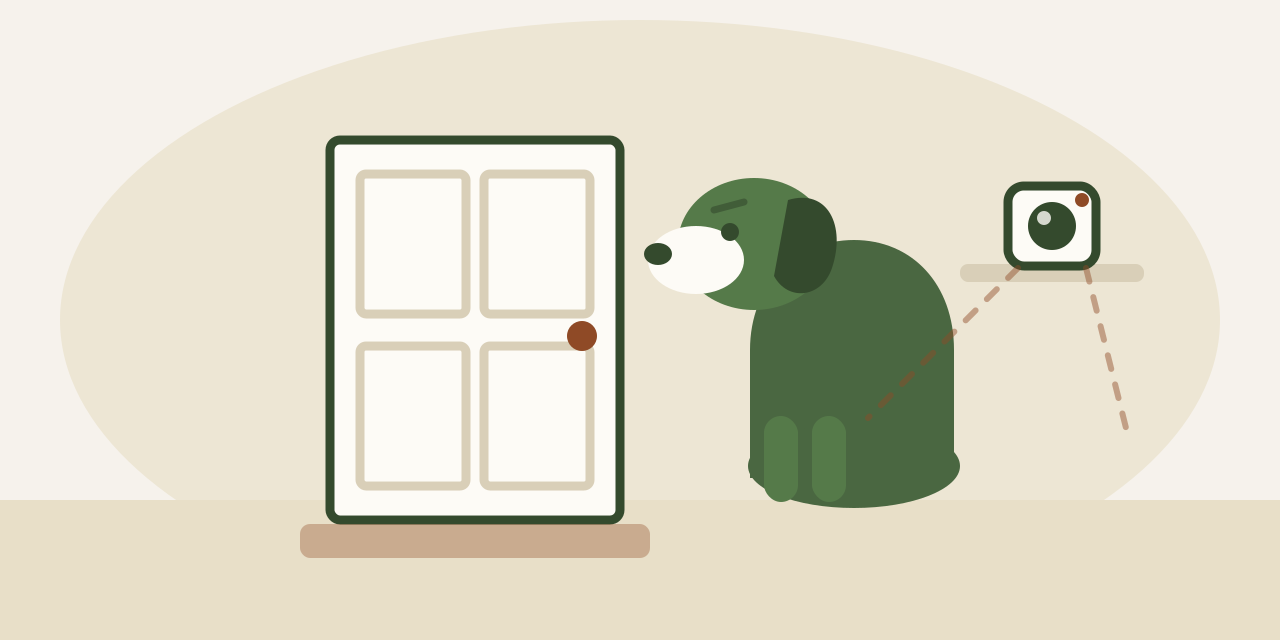
Point a camera at your dog and leave for thirty minutes. That single test sorts out most of this, and it is the reason to start here rather than at a shopping cart. Three different problems produce the same chewed door frame, and the fixes barely overlap.
What the timeline tells you. A dog in genuine separation distress is in trouble within minutes, often before you have reached the car, and stays in it. A bored or under-exercised dog settles in the first ten to fifteen minutes and then goes looking for something to do. Anxiety works on doors, windows and exit routes; boredom works on objects. Anxiety looks frantic. Boredom looks busy.
Why the label matters. The treatments pull in opposite directions. Real separation anxiety is a panic disorder and it needs graduated absence work and often a vet behaviourist. Boredom needs enrichment and exercise. Incomplete alone-time training needs a training plan you can finish in a few weeks. Buy the wrong fix and at best you waste money; at worst you shrink an anxious dog's world and make it worse.
The one piece of gear worth buying before you know the answer is the camera. Everything else on this page depends on what it shows you.

The triage question, before the camera
There is one question that does a surprising amount of the work, and it costs nothing to answer: is your dog only difficult when you are gone, or is your dog difficult when you are home too?
A dog that follows you room to room, cannot settle while you are on the sofa, panics at a closed bathroom door, and then destroys the front door when you leave is telling you something specific. The absence is not the whole problem. The dog has no ability to be separate from you at all, and the empty house is just where it shows up worst.
A dog that is relaxed, independent and self-settling all evening — sleeps in another room, does not track you around the kitchen — and then wrecks the place the moment you leave is a different animal with a different problem. Something about the departure itself is the trigger, or the empty hours are simply too long and too dull.
Neither answer is a diagnosis. But the first pattern points at genuine separation distress and the second points at boredom or unfinished alone-time training, and knowing which way you are leaning changes what you look for on the footage.
The 30-minute camera test
You are not filming for evidence of destruction. You already have that. You are filming for the first thirty minutes, because that is where the three problems separate.
Set it up honestly. Camera on the room where the damage happens, angled so you can see the exit door. Leave exactly as you normally would — same shoes, same keys, same routine. Do not sneak out, do not extend the goodbye, do not leave a special toy you would not normally leave. A rehearsed departure gives you a rehearsed answer.
Then actually leave. Get in the car and drive somewhere. Dogs are extraordinarily good at knowing you are still on the doorstep, and a dog that can hear you breathing on the other side of the door is not being tested.
Watch the whole thirty minutes, in order. The temptation is to scrub forward to the barking. The timeline is the finding — a dog that is drooling and pacing while you put your shoes on has told you the answer before the door closes, and a dog that mopes for eight minutes, sighs, and then systematically dismantles a cushion has told you a very different one.
The thirty minutes, in order
| When | What you are looking for |
|---|---|
| Before you go | Pacing, panting, drooling, shadowing you to the door while you pick up keys and shoes |
| Minutes 0–5 | Does the distress start immediately, or is there a settle attempt first? |
| Minutes 5–15 | Does it escalate, plateau, or resolve into something purposeful? |
| Minutes 15–30 | Frantic and sustained, or a dog that has found itself a job to do? |
| Throughout | Will the dog eat? A dog that ignores high-value food while alone is rarely a bored dog |
Reading the footage: three problems, one set of wreckage
| Signal | True separation anxiety | Boredom / under-stimulation | Incomplete alone-time training |
|---|---|---|---|
| Onset | Within minutes, often before you leave | After 10–15 minutes of settling | At the door, then fades and returns in waves |
| What gets destroyed | Doors, door frames, window sills, crate bars — exit routes | Objects: cushions, shoes, bins, anything with a texture | Whatever is nearest the barrier |
| Body language | Frantic, tense, panting, drooling, dilated pupils | Loose, busy, playful, self-directed | Agitated but recovers between bouts |
| Vocalising | Sustained howling or screaming, does not tire out | Intermittent, often triggered by outside noises | Bursts that shorten session over session |
| Toileting | House-trained dog soils indoors while alone | Rare unless genuinely held too long | Occasional, usually near the door |
| Does it improve with a longer walk first? | Barely | Noticeably | A little — but the fix is practice, not exercise |
| What it needs | Graduated absence work; vet or behaviourist involvement | Enrichment, exercise, something to do | A structured alone-time plan over 2–6 weeks |
A crate is not a treatment for separation anxiety, and for some dogs it is the thing that makes it worse. Behaviour professionals draw a line between separation anxiety and *confinement* anxiety, and note that many separation-anxiety dogs have both. Shrinking the space shrinks the dog's options, and for a dog already panicking about loss of control that can raise the panic rather than contain it. The specific signs that the crate is the wrong call: heavy panting, excessive drooling, frantic escape attempts, bent bars, bloodied paws or a broken tooth. A dog injuring itself trying to get out of a crate is not a dog that needs a sturdier crate.
Crate, gate, or free roam?
The crate question is where most of the well-meaning advice goes wrong, because a crate is genuinely excellent for one of these three problems and genuinely counterproductive for another.
If the camera showed boredom, a crate is largely beside the point. The dog does not need containment, it needs something to do. Crating a bored dog just gives it fewer options for entertaining itself, which is why so many crated bored dogs become barkers.
If the camera showed incomplete alone-time training, a crate is a legitimate tool — but only as a place the dog already loves, built up over weeks with the door open, meals fed inside, and no association with your departure. If the crate only appears when you leave, the dog learns exactly that.
If the camera showed genuine separation distress, do not start with the crate. The common recommendation from behaviour professionals is to stop crating during the panic phase entirely and confine to a single room behind a freestanding gate instead, or give free roam of a dog-proofed space. More room, fewer bars, less to injure yourself on. You can revisit the crate later, once the dog is genuinely comfortable alone — the order matters.
A note on crate covers. A breathable cover helps a dog that is over-stimulated by visual traffic — the window, the hallway, the street. It does nothing for a dog whose problem is your absence, and on a dog that is already claustrophobic in the crate it is one more layer between it and the exit. Useful tool, narrow use case.
What actually treats real separation anxiety
If the footage points at genuine separation distress, here is the honest part: nothing you can buy treats it. The gear further down this page manages symptoms, buys time, and makes training sessions easier. The treatment itself is a training protocol, and it is unglamorous.
Graduated absence, at the dog's pace. The core of every credible protocol is the same: work out the longest absence your dog can handle without tipping into panic — for some dogs that is genuinely ten seconds — and build from there in increments small enough that the dog never rehearses the panic. Progress is measured in the camera footage, not in how long you were gone.
Decouple the departure cues. Pick up your keys and sit back down. Put your shoes on and cook dinner. Open the front door and close it again. The predictive power of those cues is doing real work against you, and draining it is free.
Do not punish the aftermath. The dog was panicking, not misbehaving, and a dog that also gets in trouble on your return now has a second thing to dread about you leaving.
Get professional help earlier than feels necessary. Moderate-to-severe separation anxiety is the case where a certified separation-anxiety trainer or a veterinary behaviourist genuinely changes the outcome, and where medication is sometimes the thing that makes training possible rather than a shortcut around it. It is also worth a vet visit regardless: sudden-onset distress in an older dog can be pain or cognitive decline wearing an anxiety costume.
Expect weeks to months, and expect setbacks. Any source promising a fix in a weekend is selling something.
Which gear solves which problem
| Gear | Solves | Does not solve | Honest limitation |
|---|---|---|---|
| Pet camera | The diagnosis, and measuring progress | Nothing on its own | Two-way audio can startle a settling dog — mostly leave it off |
| Lick mat | The first 20–30 minutes; licking is genuinely self-soothing | A three-hour absence, or a dog too anxious to eat | A dog that refuses food while alone is telling you it is anxiety |
| Snuffle mat | Boredom; nose work is tiring in a way a walk is not | Panic | Needs washing; some dogs solve it in four minutes flat |
| Stuffable rubber toy | Boredom and departure association, frozen for duration | Panic | Count the filling against dinner or you will have a fatter, calmer dog |
| Crate | Unfinished alone-time training, when built positively | Separation anxiety — can worsen it | Only works if the crate predates the departures |
| Freestanding gate | Containment without the bars, damage limitation | Panic, but it lowers the injury risk while you train | A determined dog goes over or through — anchor it |
| White noise machine | Trigger masking for a dog that reacts to outside sound | Absence itself | Effect varies enormously dog to dog; cheap to test, do not overpromise |
What to buy, in order
Category links to Amazon so you can compare current sizes, formats and prices rather than chase one listing. Buy in this order — the first item tells you whether you need the rest.
Buy firstPet camera with two-way audio
The diagnostic and the progress meter. Look for a wide enough lens to see the exit door from where you can actually mount it, and treat the treat-dispensing models as a nice-to-have rather than the point.
Check price on Amazon For the first half hour
Freezer-safe lick mat
Fill, freeze, and hand it over as you leave. Licking triggers a genuinely calming response, and a frozen mat stretches a two-minute snack into twenty. Buy two so one is always frozen.
Check price on Amazon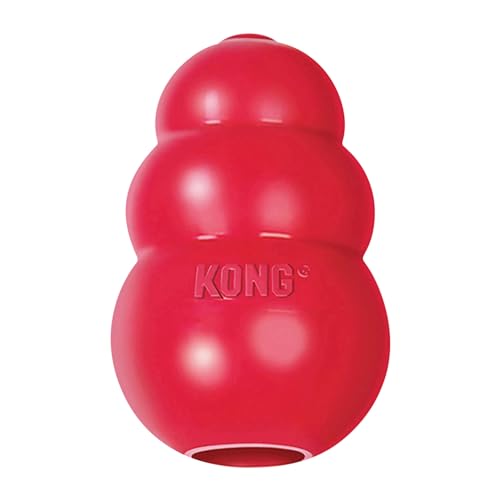 Duration
Stuffable rubber toy
The other half of the departure ritual, and the more durable of the two. Frozen, a well-packed one outlasts any lick mat. Size up rather than down and count the filling against the daily ration.
Check price on Amazon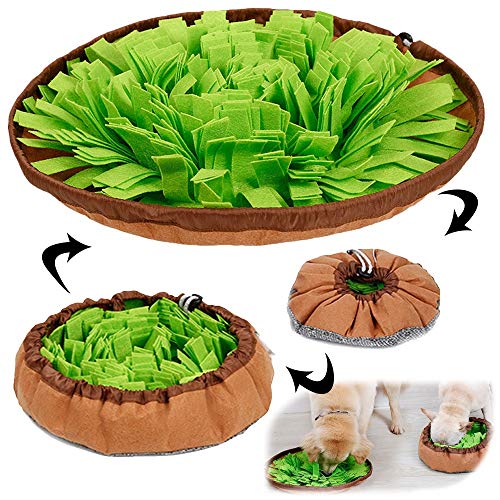 If it is boredom
Snuffle mat
Scatter the dry portion of dinner into it instead of the bowl. Nose work tires a dog out of proportion to the effort involved, which is exactly what an under-stimulated dog is short of.
Check price on Amazon Instead of a crate
Freestanding extra-wide dog gate
The right containment for a dog that panics behind bars: one room, no cage, far less to injure itself on. Anchor or brace it — freestanding means freestanding until a 60 lb dog leans on it.
Check price on Amazon Only if the crate is already a good place
Wire crate with divider
For unfinished alone-time training, not for panic. If your dog does not already choose to nap in it with the door open, this is not the purchase that fixes today.
Check price on Amazon Cheap experiment
White noise machine
Worth trying if the camera shows your dog reacting to the hallway, the street or the neighbours. Worth skipping if the distress starts before the door has closed.
Check price on AmazonSeparation anxiety: FAQ
How do I know if my dog has separation anxiety or is just bored?
Film the first thirty minutes. An anxious dog is in distress within minutes and stays there, targets exits, and often will not eat. A bored dog settles for ten to fifteen minutes, then goes looking for a job and picks objects rather than doors. The other tell: a long walk before you leave makes a real difference to boredom and almost none to anxiety.
Should I crate a dog with separation anxiety?
Not as a starting point. Behaviour professionals distinguish separation anxiety from confinement anxiety and note the two often travel together — a smaller space can raise the panic rather than contain it. If your dog pants, drools, bends bars or injures itself in the crate, stop crating and confine to a room behind a gate instead. A crate can come back later, once being alone is genuinely fine.
Do lick mats and puzzle toys actually help?
For the first twenty to thirty minutes, and for boredom, yes — licking and foraging are genuinely self-soothing, and freezing a mat stretches the effect. They do not treat separation anxiety, and there is a diagnostic in that: a dog that ignores high-value food while alone is a dog whose problem is anxiety, not entertainment.
Does white noise help a dog with separation anxiety?
Sometimes, and for a narrow reason — it masks the outside triggers, footsteps in a hallway, a delivery van, a neighbour's door. It does nothing about your absence itself. It is a cheap thing to test and an easy thing to overpromise, and the honest answer is that the effect varies a great deal between dogs.
How long does it take to fix separation anxiety?
Weeks to months for a real case, working in increments small enough that the dog never rehearses the panic. Incomplete alone-time training often resolves in two to six weeks. Boredom can improve in days. Anything promising a weekend fix for genuine separation distress is not describing the same problem.
Is it ever a medical problem rather than a behavioural one?
Yes, and it is worth ruling out before you commit months to training. Sudden-onset distress in an adult or senior dog, indoor toileting from a reliably house-trained dog, or a change in sleep patterns can all point at pain, sensory loss or cognitive decline. Start with your vet.
Will getting a second dog fix it?
Usually not, and it is an expensive experiment to run on a hunch. Separation anxiety in its classic form is about the absence of a specific person, not the absence of company — plenty of dogs with it are perfectly distressed alongside another dog. If the camera shows a dog that is fine as long as anyone is home, that is a different picture, and worth discussing with a trainer before you take on another fifteen-year commitment.
Related reading
If the camera pointed at boredom, the fix is enrichment and duration: best dog toys for aggressive chewers covers the toys that survive being left alone with a dog, and best slow feeder dog bowls turns the meal itself into ten minutes of work. Stuffing a lick mat or a rubber toy is food, so count it against the day using our portion math guide.
This guide is research and behaviour-source synthesis, not a substitute for a professional assessment of your own dog. Moderate to severe separation anxiety is a case for a certified separation-anxiety trainer or a veterinary behaviourist, and a dog that is injuring itself while alone needs one now rather than after another month of experimenting.